 English ✓
 Deutsch
 Français
 Español
 Italiano
 Magyar

Right now, somewhere, a captain is lifting a trophy above his head. Confetti is falling. Grown adults are crying. It is the image of this summer's World Cup — and it is the image you will keep.
So ask yourself something honest. A year from now, will you remember the exact scoreline of the final? Probably not. The winning goal? Maybe. But that picture — the raised trophy, gold catching the light — that one stays. And it is no accident. That is simply how memory works.
The Brain Doesn't Keep Score
Our memories don't store spreadsheets. The brain is poor at holding numbers and league tables, but it is extraordinary at holding moments — especially the ones tied to emotion and to something we can physically touch.
That is exactly what a medal does. The second it lands in someone's hand, it becomes an anchor. Years later, the weight of it, the ribbon, the engraved date — they pull the whole day back into focus: the nerves at the start line, the friend who cheered, the finish.
And none of this is reserved for World Cups. The same thing happens at a Saturday-morning fun run, a school sports day, or a company gala. The scale changes. The feeling doesn't.
Why This Matters If You Run the Event
Here is where it gets practical. If the medal is the moment people remember, then the medal is quietly doing a job for you long after everyone has gone home.
People don't come back to an event because the logistics ran smoothly. They come back because of how it made them feel — and the recognition at the end is the emotional high point of the whole day. A good medal ties your event to that feeling. Next year, when entries open, that feeling is what makes them sign up again.
The reverse is just as true. A thin, generic disc — the kind that feels like an afterthought — quietly undercuts everything that came before it. Most people couldn't tell you why. They just sense the event didn't quite care. And that feeling sticks too.
People don't return because the logistics ran smoothly. They return because of how the day made them feel.
The Free Advertising You're Sitting On
This is the part most organisers miss. People photograph themselves with their medals. The selfie at the finish line, the proud kid on the school steps, the team huddled around the trophy — they post all of it. And every single one of those posts is free promotion for your event, seen by hundreds of friends who weren't there.

But there is a condition. People only share what they're proud of. A well-made, good-looking medal gets worn home, photographed, and posted. A cheap one goes straight into a drawer, and nobody sees it again.
So the quality of your event medals isn't only about the people in the room. It decides whether your event reaches the people who weren't.
What Actually Makes the Podium Moment Land
Three things turn a handout into a moment worth remembering.
-
Quality you can feel
Weight in the hand, a clean finish, a ribbon that doesn't fray — people register all of it in a second, even if they never find the words for it. It signals that the achievement was taken seriously.
-
Personalisation
The event name, the date, a logo — these turn a generic award into something that exists nowhere else in the world. It belongs to that one day and no other.
-
The ceremony itself
A medal handed out by the door as people leave is just admin. The same medal, presented on a podium with names read aloud, becomes recognition. The object matters — but so does the moment you build around it.

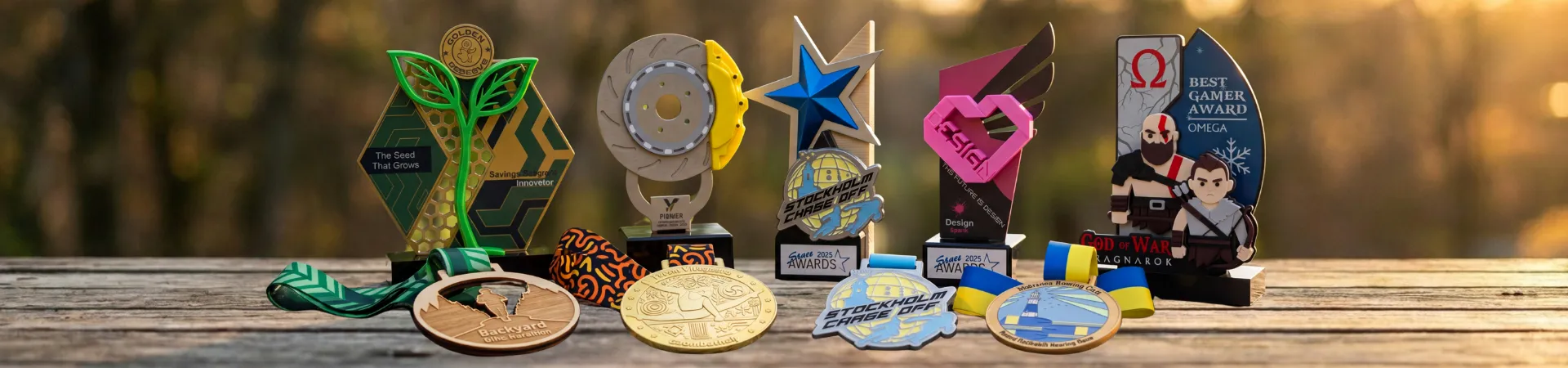
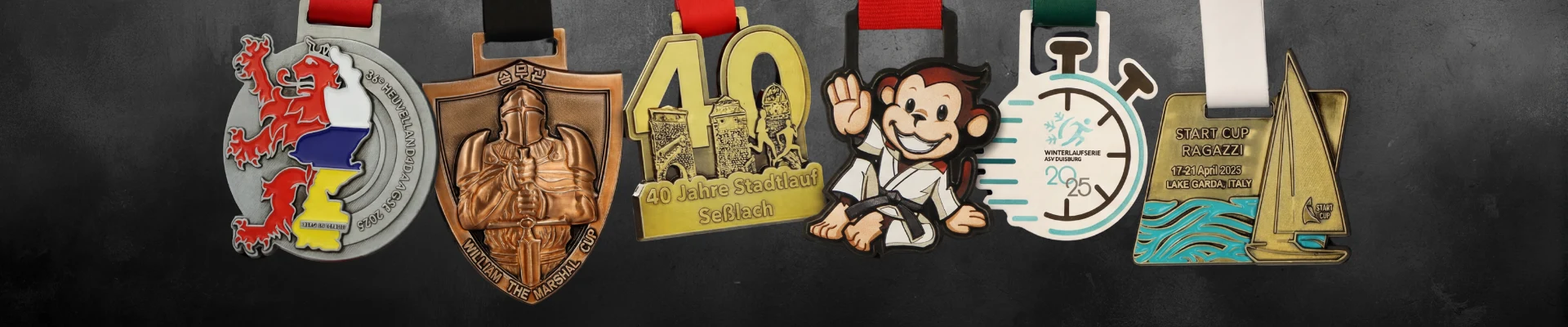
Quality, personalisation and ceremony are exactly what we design for when we make custom medals and trophies — pieces built to be felt, kept and photographed.
Give Them a Finish Worth Remembering
Long after the results are forgotten, people remember how the day ended — and whether they were made to feel it mattered. The podium moment is not the cheap line at the bottom of your budget. It's the part they carry home.